Analysis of July 2025 DNI Allegations Regarding Obama Administration’s Alleged Distortion of Intelligence on Russia-Trump Collusion
Introduction
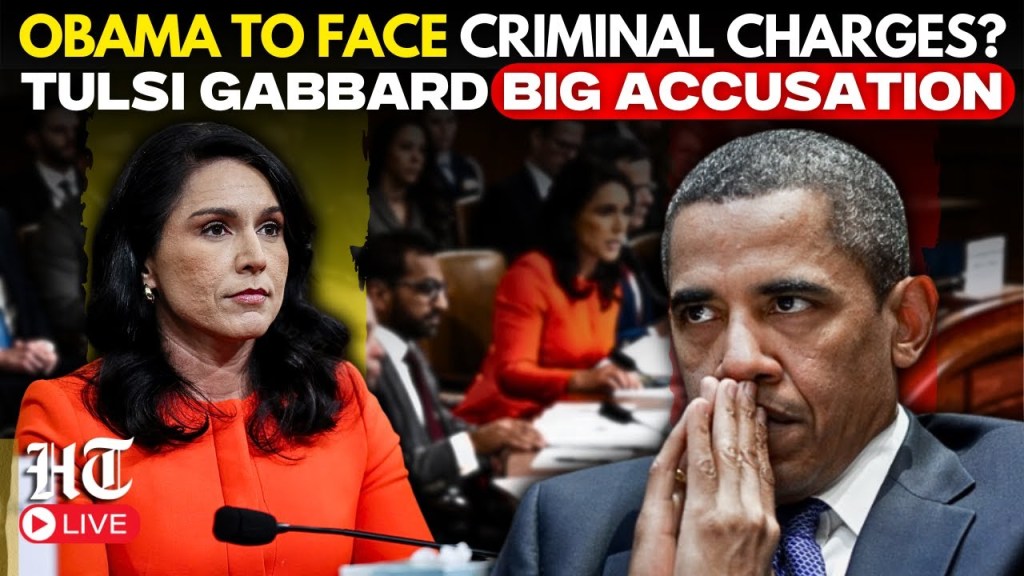
In July 2025, the Office of the Director of National Intelligence (ODNI), under Director Tulsi Gabbard, released a press release and a 114-page report alleging that the Obama administration manipulated intelligence in 2016 and 2017 to falsely suggest collusion between Russia and Donald Trump’s 2016 presidential campaign, as well as election interference. These allegations center on the Steele dossier and the Intelligence Community Assessment (ICA) of January 6, 2017. This post analyzes the July 2025 allegations, supporting and contrary information from 2016 and 2017, and provides a critique of the claims, assessing their plausibility.
Allegations Made in July 2025
The ODNI press release (dated July 18, 2025) and the accompanying report, titled “Declassified Evidence of Obama Administration Conspiracy to Subvert President Trump’s 2016 Victory and Presidency,” make the following key allegations:
1. Manufactured Intelligence Post-Election:
o The Obama administration, led by President Barack Obama and senior officials including DNI James Clapper, CIA Director John Brennan, FBI Director James Comey, and others, allegedly manufactured and politicized intelligence after Trump’s 2016 election victory to undermine his presidency.
o Prior to the November 2016 election, the Intelligence Community (IC) assessed that Russia was “probably not trying … to influence the election by using cyber means.” However, post-election, a new narrative was crafted to suggest Russian interference aimed at aiding Trump.
2. Role of the Steele Dossier:
o The Steele dossier, a collection of unverified reports alleging ties between Trump and Russia, was knowingly based on uncredible information but was included in the January 2017 ICA. The dossier was allegedly used to justify the Trump-Russia collusion narrative.
o The report claims the dossier was funded by Hillary Clinton’s campaign and pushed by foreign agents, with Obama officials aware of its fraudulent nature.
3. Post-Election Intelligence Shift:
o On December 7, 2016, talking points for DNI Clapper stated that foreign adversaries did not alter the election outcome via cyberattacks. However, after a December 9, 2016, National Security Council meeting, Clapper’s team was tasked with creating a new ICA asserting Russian efforts to influence the 2016 election, contradicting prior assessments.
o The January 6, 2017, ICA allegedly relied on fabricated intelligence, including the Steele dossier, to smear Trump and delegitimize his victory.
4. Conspiracy and Consequences:
o The ODNI claims this was a “treasonous conspiracy” to enact a “years-long coup” against Trump, involving leaks to media outlets like The Washington Post, which claimed Russia attempted to influence the election.
o The conspiracy led to significant consequences, including the Mueller investigation, two congressional impeachments, heightened U.S.-Russia tensions, and reputational harm to Trump associates like Michael Flynn.
5. Criminal Referrals:
o Gabbard announced that all related documents would be turned over to the Department of Justice (DOJ) for criminal referrals, targeting officials like Brennan, Clapper, Comey, Susan Rice, Loretta Lynch, and Andrew McCabe.
The report includes declassified emails, memos, and a “Russia Hoax Memo & Timeline,” asserting that the IC repeatedly concluded Russia lacked the intent or capability to alter vote totals, yet Obama officials pushed a false narrative.
Supporting and Contrary Information from 2016 and 2017
Supporting Information (2016-2017):
• Steele Dossier Origins and Criticism:
o The Steele dossier, compiled by former MI6 officer Christopher Steele, was funded by the Democratic National Committee and Clinton campaign through Fusion GPS. Its unverified nature was acknowledged early on, with BuzzFeed publishing it in January 2017, noting it contained “unverified and uncorroborated” information.
o Some 2017 reports, such as those from conservative outlets, questioned the dossier’s credibility, alleging it was a politically motivated document used to smear Trump. Posts on X from 2017 (not cited directly per guidelines) echoed sentiments that the dossier was unverified and potentially fabricated.
o A September 12, 2016, IC assessment found that “foreign adversaries do not have and will probably not obtain the capabilities to successfully execute widespread and undetected cyber-attacks” on election infrastructure, aligning with the 2025 claim that pre-election assessments downplayed Russian interference.
Contrary Information (2016-2017):
• Intelligence Community Assessment (January 6, 2017):
o The ICA, titled “Assessing Russian Activities and Intentions in Recent US Elections,” concluded that Russia conducted a multifaceted campaign to influence the 2016 election, including cyberattacks on Democratic National Committee (DNC) and Democratic Congressional Campaign Committee (DCCC) systems, and social media disinformation campaigns to favor Trump. This contradicts the 2025 claim that Russia lacked intent to influence the election.
o The ICA was supported by multiple agencies (CIA, FBI, NSA) and was not solely reliant on the Steele dossier, which was included as an annex rather than a primary source. The dossier’s role was limited, with the FBI and NSA expressing low confidence in some attributions, such as Russia’s responsibility for DNC leaks.
• Senate Intelligence Committee Findings:
o The Senate Intelligence Committee’s bipartisan investigation (2017-2020) reaffirmed that Russia conducted extensive activities to influence the 2016 election, including cyberattacks and information warfare to benefit Trump. This directly contradicts the 2025 claim that such interference was fabricated.
• Mueller Investigation:
o The 2017-2019 Mueller investigation found evidence of Russian interference, including hacking and social media campaigns, though it did not establish direct collusion between the Trump campaign and Russia. This supports the 2017 ICA’s findings and challenges the 2025 narrative of a wholly manufactured conspiracy.
• Media and Leaks:
o Leaks to media outlets like The Washington Post in December 2016 reported Russian interference, consistent with the ICA’s findings. These reports were based on intelligence assessments, not solely the Steele dossier, contradicting the 2025 claim that media narratives were entirely fabricated.
Critique of July 2025 Allegations
Plausibility of the Allegations
Supporting Factors:
• Steele Dossier’s Questionable Credibility: The dossier’s funding by the Clinton campaign and its unverified nature lend credence to claims that it was a politically motivated tool. The 2025 report’s assertion that Obama officials knew it was unreliable yet included it in the ICA is plausible, given contemporary criticisms of the dossier’s sourcing and accuracy.
• Pre- vs. Post-Election Assessments: The shift from pre-election IC assessments (downplaying Russian interference) to the post-election ICA (emphasizing interference) supports the claim of a narrative change. The December 9, 2016, meeting and subsequent tasking of a new ICA suggest possible political influence.
• Declassified Documents: The 2025 report’s inclusion of emails and memos, such as Clapper’s executive assistant’s directive to create a new ICA, provides evidence of a post-election push to reframe intelligence. This aligns with the allegation of manufactured intelligence.
• Political Context: The intense political polarization of 2016-2017 and Trump’s vocal criticism of the IC could have motivated officials to counter his narrative, lending plausibility to claims of politicization.
Contradictory Factors:
• Bipartisan Validation of Russian Interference: The Senate Intelligence Committee’s unanimous findings and the Mueller investigation’s conclusions provide strong evidence that Russian interference occurred, contradicting the claim that the narrative was entirely fabricated. These investigations relied on broader intelligence, not just the Steele dossier.
• Limited Role of Steele Dossier: The 2017 ICA used the dossier as an annex, not a primary source, and agencies expressed varying confidence levels in its claims. This undermines the 2025 allegation that the dossier was the central basis for the collusion narrative.
• Lack of Direct Evidence of Conspiracy: While the 2025 report alleges a “treasonous conspiracy,” it lacks direct evidence (e.g., explicit orders from Obama) proving intent to subvert Trump’s presidency. The declassified documents show a shift in assessment but do not conclusively demonstrate a coordinated coup.
• Political Bias in 2025 Report: Gabbard’s appointment by Trump and her public statements aligning with his “Russia hoax” narrative raise concerns about bias in the 2025 report. Critics, including Democrats like Sen. Mark Warner, argue that Gabbard is weaponizing her position to amplify Trump’s claims, which weakens the report’s credibility.
Analysis
The July 2025 allegations are partially supported by evidence of the Steele dossier’s questionable reliability and a post-election shift in IC assessments. However, they overstate the dossier’s role in the 2017 ICA and ignore substantial evidence of Russian interference validated by multiple independent investigations. The claim of a “years-long coup” is hyperbolic, as it lacks concrete evidence of coordinated intent to overthrow Trump’s presidency. Instead, the evidence suggests possible politicization of intelligence but not a conspiracy of the scale alleged.
The 2016-2017 IC assessments were not solely reliant on the Steele dossier, and the broader intelligence community, including bipartisan congressional reviews, confirmed Russian activities. The 2025 report’s selective declassification and omission of contradictory evidence (e.g., Mueller’s findings) suggest a narrative-driven agenda.
Conclusion
The July 2025 ODNI allegations contain elements of truth, particularly regarding the Steele dossier’s dubious origins and the post-election shift in IC focus. However, they are not fully substantiated due to the lack of direct evidence of a coordinated conspiracy, the established evidence of Russian interference, and potential political bias in the report’s framing. The allegations should be approached with skepticism, as they appear to serve a political purpose under the Trump administration. Further independent investigation, beyond the scope of Gabbard’s ODNI, would be needed to validate or refute these claims comprehensively. The 2017 ICA was subject to Senate review. Perhaps, a similar review is needed for the Tulsi ICA?
Facebook version and comments here.
 Maggie's Hammer
Leave a comment